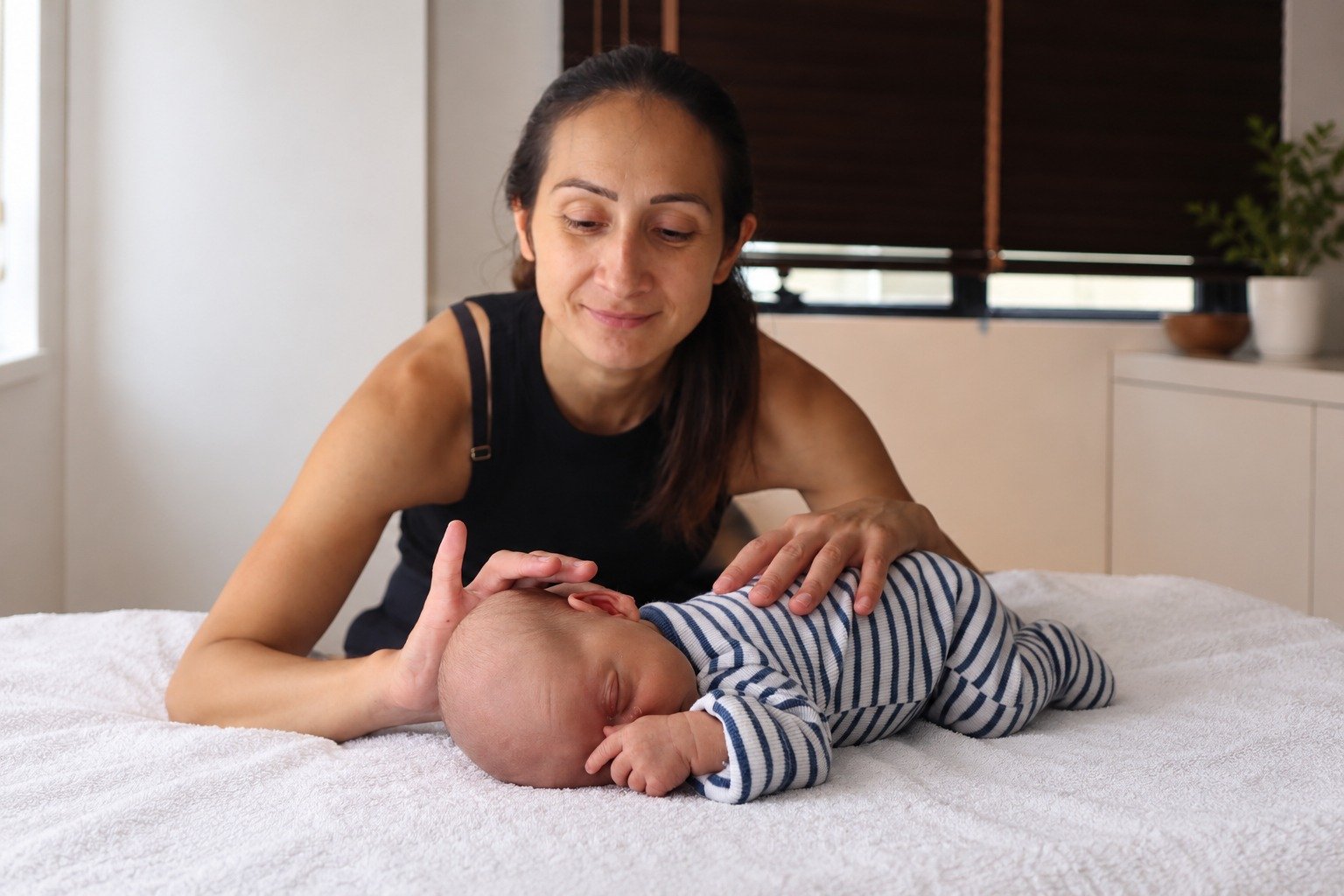
Osteopathy for Baby Colic & Torticollis

Gentle paediatric osteopathy in Central and Stanley, Hong Kong, with support for you too.
What is it ?

How osteopathy can help your baby

You’ve fed them, changed them and cuddled them close, and they’re still not quite settled. Or perhaps you’ve noticed your baby likes to look the same way, even when you’re on the other side of the room. Pregnancy and birth ask a lot of a baby’s body. Paediatric osteopathy uses very gentle, hands-on techniques to ease tension in your baby’s head, neck, back and tummy. That can help them move more freely and feel more comfortable while feeding and sleeping. As a multidisciplinary clinic, our osteopaths work alongside our midwives and postnatal team, so the whole family is supported.
Supporting babies with colic and torticollis
  • Colic and torticollis are quite different, so we always start with a thorough osteopathic assessment of how your baby moves
  • Gentle, hands-on techniques suited to tiny bodies
  • Support for freer, more comfortable head and neck movement
  • A simple treatment plan with goals we’ll review together
  • Easy ideas to continue your baby’s care at home
  • Ongoing kids osteopathic care as they grow

Your baby’s osteopathy appointment

Your first osteopathy appointment takes about 35 minutes, and you don’t need a referral. Both parents are welcome, and so are feeds, nappy changes and breaks. We follow your baby’s pace.
We listen:We start with a relaxed chat about your pregnancy, your baby’s birth, feeding, sleep and anything you’d like to ask. You know your baby better than anyone, so everything you’ve noticed helps.
Osteopathic assessment:Your osteopath gently checks how your baby moves their head, neck and body, feeling for areas where they may be holding tension, from the skull and neck to the ribs and tummy.
Gentle osteopathic treatment:If osteopathy is right for your baby, treatment can often begin in the same visit. Techniques are very light: think soft holds and subtle movements rather than manipulation. Many babies relax deeply, and some drift off to sleep.
We plan together:We explain what we’ve found in plain language and agree next steps with you. If another specialist could help, we’ll point you in the right direction.
Little things you can do at home:Cuddles, gentle rocking and winding after feeds can help your baby feel calmer. If your baby likes looking one way, short moments of supervised tummy time and chatting to them from both sides encourage them to explore. Let their head move naturally rather than turning it for them, and we’ll show you simple ideas that suit your baby. At sleep time, lay your baby on their back on a firm, flat surface.

Practitioners

Meet Our Practitioner

Award-winning osteopath & functional medicine expert. Named Best Medical Practitioner in HK (WLA 2023).
UK-trained osteopath specializing in cranial, pre/post-natal & paediatric care; yoga-informed approach.
General osteopathy, Paediatric Osteopathy and Women’s Health (Pregnancy and beyond)

Frequently Asked Questions

Bringing your baby to an osteopath for the first time is bound to raise a few questions. Here are the ones parents ask us most often. If yours isn’t here, send us a message on WhatsApp and our team will be happy to help.

What is paediatric osteopathy?
Paediatric osteopathy is a gentle, hands-on approach for babies and children. Your osteopath uses light, precise touch to assess and ease tension in the body, helping your baby move and settle more comfortably. It’s suitable from birth.

Is osteopathy safe for babies?
Yes. Our osteopaths are trained to work with babies, and the techniques are extremely gentle: no cracking or manipulation. We always explain what we’re doing and adjust to your baby’s comfort throughout.

What does colic look like?
Colic is when a healthy, well-fed baby has long spells of crying, often in the evening. It tends to start in the first few weeks and usually eases by around three to four months. Your baby might be hard to comfort, clench their little fists, pull their knees up or arch their back. If feeding feels tricky, your paediatrician is a great person to talk to as well.

What does torticollis look like?
You might notice your baby’s head tilting towards one shoulder, a favourite side they like to look to, or that turning the other way takes a little more effort. Some babies also develop a slightly flatter spot on one side of their head. A favourite side isn’t always torticollis, and a gentle check will help you understand what’s going on.

Should I wait and see if my baby grows out of it?
It’s always worth having a head tilt or favourite side checked early. Babies grow and change so quickly, and a little support early on helps them move comfortably. We work alongside paediatricians and paediatric physiotherapists, so your baby gets the right care from the start.

Are colic and torticollis connected?
Some babies have both, but one doesn’t necessarily cause the other. We look at each one separately, so your baby gets the support that fits.

How many visits will my baby need?
Every baby is unique. At your first appointment, your osteopath will see whether osteopathy is right for your little one. If it is, we’ll agree simple goals together and review progress as we go.

When should I call the doctor?
You know your baby best, so always trust your instincts. Your paediatrician can help if crying continues, feeding is difficult or you have questions about weight gain. If your baby has a fever (38°C or above under three months), seems unusually sleepy, has trouble breathing, vomits green, or their cry sounds very different, seek medical care straight away.

Testimonial

Hear From the People We've Helped

Every person is different, so is the way we approach care.

Not sure where to start?

Let’s work it out together

Every baby is different, and every question is a good one. Send us a message on WhatsApp and we’ll help you find the right next step for your little one.
Osteopath Emma treating a newborn baby